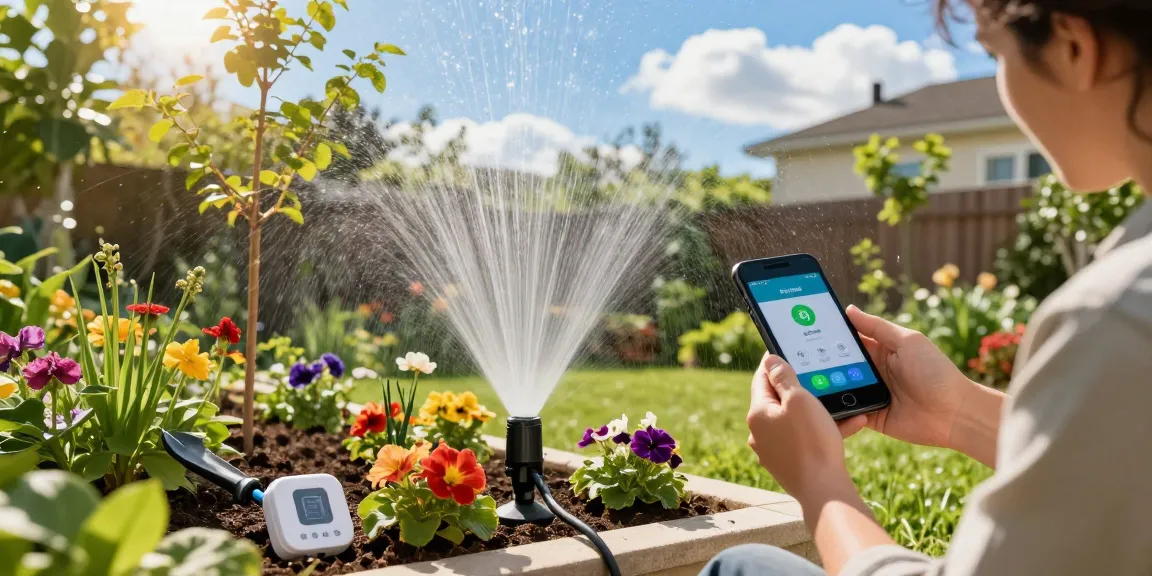
When Megan noticed her peonies were wilting in the afternoon and her new salvia never seemed to bloom fully, she knew something was off. Her soil was compacted near the walkways, while the beds by the driveway baked dry by mid-day. She needed a watering approach that targeted roots, avoided runoff, and fit into her busy weeknight schedule.
Match the problem to the right irrigation style
Flower beds present distinctive challenges: shallow-rooted annuals, dense perennials, and mixed sun/shade zones all need different rhythms of moisture. The common mistakes are watering from above with high-pressure sprays that wet foliage (increasing disease), or running sprinklers for too long so water runs off walkways. Here’s how to select the right system by problem.
Problem: Light, frequent surface wetting — plants show leaf wetting and fungal spots
Solution: Low-pressure, root-zone focused systems like drip or soaker and shorter, more frequent cycles. A soaker hose laid under a light layer of mulch gives a gentle, even trickle directly to the root zone. If you have mixed plant sizes, use adjustable emitters so deeper-rooted perennials get more flow than shallow annuals.
- Example: A 20-foot soaker hose delivering ~0.5–0.7 gallons/hour per foot can keep a 4x20 bed evenly moist for summer needs.
Problem: Compacted soil with poor infiltration — most water runs off
Solution: Pulse watering with a drip network. Instead of one 30-minute continuous soak that runs off, use three 10-minute cycles spaced 30 minutes apart; that lets water soak in between pulses. A simple drip kit with 1 GPH (gallon per hour) emitters spaced 12–18" helps water penetrate without puddling.
For step-by-step layout tips and parts lists, many gardeners who want to set up flower bed irrigation for healthier blooms find it useful to follow a focused guide that covers emitter spacing, head-to-head coverage for mixed beds, and mulch depth.
Compare main options: soaker hose, drip irrigation, and micro-sprays
Choosing among the three depends on bed size, plant diversity, and how hands-off you want to be. Below is a short comparison to help decide which setup matches your scenario.
SystemBest forProsConsSoaker hoseLong, narrow beds; simple perennialsCheap, easy to install, gentleLess precise; can vary flow along lengthDrip irrigationMixed plantings, raised beds, layered plantingsHighly precise, conserves water, expandableHigher initial setup, needs occasional flushingMicro-sprayLarge beds where some foliage wetting is OKCovers broader area, adjustable radiusCan increase disease risk; less efficient than drip
Concrete scenario: A 10'x20' cottage-style bed with roses and lavender benefits most from a drip layout with 1 GPH emitters for the lavender and 2 GPH for roses, controlled by a programmable timer that runs two short cycles daily during hot spells.
Timer choices and automation to fit your lifestyle
How you control the watering is as important as the tubing and emitters. A lot of watering mistakes happen because schedules are static: run the same time every day regardless of weather. Smart timers solve that, but the best type depends on your yard size.
Small beds and weekend gardeners
If you only water a couple of narrow beds, a simple mechanical or battery-operated timer that runs drip lines or a soaker hose on short cycles is fine. Example: a single-zone battery timer set to two 10-minute pulses a day during heat waves.
Multiple beds and vacation schedules
For larger or varied beds, a WiFi-enabled controller provides weather-based adjustments and remote control. A WiFi timer such as the RainPoint model lets you create multiple programs (e.g., shade bed vs. sunny bed) and skip watering automatically when rain is forecast.
According to the EPA WaterSense program, smart irrigation controllers can reduce outdoor water use by an average of 8–30% depending on region and installation; in some cases savings reach several thousand gallons per year for typical U.S. homes (source: EPA WaterSense). Use a smart controller if you want hands-off precision and measurable water savings.
Design details: layout, emitter selection, and scheduling
Small choices in layout and scheduling make a big difference. Think in zones: group plants by water needs, sun exposure, and soil type. Then match each zone to a flow rate and timer program.
Emitter selection and spacing
Use 0.5–1.0 GPH emitters for small annuals and 1–2 GPH for larger perennials and shrubs. Space emitters 8–18" apart depending on root spread. For mixed beds, run separate lateral lines so high-needs plants don't soak drought-tolerant neighbors.
Mulch depth, pressure, and maintenance
Apply 2–3" of organic mulch over drip tubing to reduce evaporation and protect hoses from UV. Keep line pressure between 10–30 PSI; use a pressure regulator and filter to reduce clogging. Flush lines yearly and inspect emitters each season; a clogged 1 GPH emitter drops performance and creates dry spots.
- Example schedule table (mid-summer, loamy soil):
ZoneEmitterCycles per dayMinutes per cycleSunny perennials1 GPH @ 12"212Roses / shrubs2 GPH @ 18"120New transplantsSoaker / 0.5 GPH38
Concrete example: On a 5'x10' bed with clay-loam soil, run two 12-minute cycles for 1 GPH emitters in July. That typically delivers enough root-zone wetting without causing runoff.
Installation checklist and common pitfalls
Before you dig, sketch the bed and mark irrigation zones. Measure bed width to decide how many lateral lines you need. Lay lines on top of soil first to check coverage before burying under mulch.
- Plan zones by plant water need and sun exposure.
- Use a filter and pressure regulator off the faucet; attach a backflow preventer if needed.
- Lay main supply, then laterals every 12–18" as needed.
- Install emitters and test for even flow; adjust spacing if necessary.
- Cover tubing with 2–3" mulch and stake lines every 2–3 feet.
Real-world pitfall: Homeowners often run soaks for long periods assuming more water = better growth. Instead, pulse cycles and targeted emitters reduce runoff and encourage deeper roots. If you have a busy schedule or multiple zones, a WiFi timer from RainPoint can handle that schedule automatically and adjust for weather so your beds get exactly what they need.
Typical maintenance: inspect emitters monthly, flush main lines in spring, and replace any brittle soaker hoses every 3–5 years depending on sunlight exposure. Small interventions like this prevent dry patches and keep blooms strong through heat waves.
For a full, step-by-step plan tailored to flower beds of different shapes and plant mixes, a dedicated page can guide you through the process if you want to set up flower bed irrigation for healthier blooms.